Bee’s Wing is 20% off through April 5th with the code beeswing!
Sizes 1 (2, 3, 4, 5) (6, 7, 8, 9) (10, 11, 12, 13)
Measurements
Finished Bust circumference, buttoned: 34 ¼ (37 ¾, 41 ½, 45 ¼, 49) (52 ½, 56 ¼, 60, 63 ¾) (67 ½, 71, 74 ¾, 78 ½)” / 87 (96, 105.5, 115, 124.5) (133.5, 143, 152.5, 162) (171.5, 180.5, 190, 199.5) cm
Sample shown in 4th size with 1 ¼” (3 cm) positive ease at full bust; recommended ease: 1-4” (2.5-10 cm) of positive ease at bust and 1-2” 2.5-5 cm at upper arm. Since ease is a very personal thing, however, this is up to knitter’s preference. When in doubt for picking your size, check the schematic for further detailed measurements.
Yarn
Elena by Emilie et Philomene (100% Blue-Faced Leicester wool; 547 yards (500 m)/4.4 oz (125 g); 2 skeins in color Busky, 2 (2, 2, 2, 3) (3, 3, 3, 3) (3, 4, 4, 4) skeins
or 805 (885, 975, 1060, 1150) (1230, 1320, 1405, 1495) (1585, 1665, 1755, 1840) yards, 736 (809, 892, 969, 1052) (1125, 1207, 1285, 1367) (1449, 1522, 1605, 1682) meters light fingering weight yarn
Needles
32” (80 cm) or longer circular needle and preferred method of small circumference knitting, for body and sleeves (DPNs, Magic Loop, etc)
Suggested size: US 4 (3.5 mm)
32” (80 cm) or longer circular needle and preferred method of small circumference knitting, for ribbing at collar, hem and sleeve cuffs (DPNs, Magic Loop, etc)
Suggested size: US 2 (2.75 mm)
Notions
stitch markers, stitch holders or waste yarn, 7 (7, 7, 7, 7) (7, 7, 7, 8) (8, 8, 8, 8) ⅝” (1.5 cm) buttons, tapestry needle, blocking materials
Gauge
All patterns are on larger needle, after blocking
26 sts = 4” (10 cm) in all patterns
36 rows/rounds = 4” (10 cm) in stockinette
6 rows/rounds of Slip Stitch pattern = .5” (1.25 cm)
6 rows/rounds of Lace pattern = .75” (2 cm)
Construction Notes
The sweater is worked top down, and yoke short row shaping, increases, and the split at the underarm for back, front, and sleeves all happen during stockinette rows. The body is worked back and forth, continuing in pattern, and the sleeves are worked in the round. Both are finished with 1x1 rib. Finally, the neckband and the buttonbands are picked up and knit in 1x1 rib.
The front and back proportions on Bee’s Wing are intentionally not equal, as most bodies carry more circumference in the front half of the body than in the back half. For example, in the largest size, the split for the fronts and back is 112 front sts, 213 back sts, and 112 front sts. With the underarm CO and button bands in place, this leads to 3 ½” (8.5 cm) additional width across the front than the back. If that’s not the case for your own proportions, you can subtract stitches from the fronts and add them to the back. In the largest size again for example, instead of 112 sts for each front, we could do 109, shifting those 3 stitches from each front into the back for 219 stitches. This would lessen the additional front width to 1 ¾” (4.5 cm). Likewise, if needed, you can shift stitches the other direction, adding more width to the front and taking it away from the back. For more measurement details, please see schematic.
Bee’s Wing is 20% off through April 5th with the code beeswing!
Sizes 1 (2, 3, 4, 5) (6, 7, 8, 9) (10, 11, 12, 13)
Measurements
Finished Bust circumference, buttoned: 34 ¼ (37 ¾, 41 ½, 45 ¼, 49) (52 ½, 56 ¼, 60, 63 ¾) (67 ½, 71, 74 ¾, 78 ½)” / 87 (96, 105.5, 115, 124.5) (133.5, 143, 152.5, 162) (171.5, 180.5, 190, 199.5) cm
Sample shown in 4th size with 1 ¼” (3 cm) positive ease at full bust; recommended ease: 1-4” (2.5-10 cm) of positive ease at bust and 1-2” 2.5-5 cm at upper arm. Since ease is a very personal thing, however, this is up to knitter’s preference. When in doubt for picking your size, check the schematic for further detailed measurements.
Yarn
Elena by Emilie et Philomene (100% Blue-Faced Leicester wool; 547 yards (500 m)/4.4 oz (125 g); 2 skeins in color Busky, 2 (2, 2, 2, 3) (3, 3, 3, 3) (3, 4, 4, 4) skeins
or 805 (885, 975, 1060, 1150) (1230, 1320, 1405, 1495) (1585, 1665, 1755, 1840) yards, 736 (809, 892, 969, 1052) (1125, 1207, 1285, 1367) (1449, 1522, 1605, 1682) meters light fingering weight yarn
Needles
32” (80 cm) or longer circular needle and preferred method of small circumference knitting, for body and sleeves (DPNs, Magic Loop, etc)
Suggested size: US 4 (3.5 mm)
32” (80 cm) or longer circular needle and preferred method of small circumference knitting, for ribbing at collar, hem and sleeve cuffs (DPNs, Magic Loop, etc)
Suggested size: US 2 (2.75 mm)
Notions
stitch markers, stitch holders or waste yarn, 7 (7, 7, 7, 7) (7, 7, 7, 8) (8, 8, 8, 8) ⅝” (1.5 cm) buttons, tapestry needle, blocking materials
Gauge
All patterns are on larger needle, after blocking
26 sts = 4” (10 cm) in all patterns
36 rows/rounds = 4” (10 cm) in stockinette
6 rows/rounds of Slip Stitch pattern = .5” (1.25 cm)
6 rows/rounds of Lace pattern = .75” (2 cm)
Construction Notes
The sweater is worked top down, and yoke short row shaping, increases, and the split at the underarm for back, front, and sleeves all happen during stockinette rows. The body is worked back and forth, continuing in pattern, and the sleeves are worked in the round. Both are finished with 1x1 rib. Finally, the neckband and the buttonbands are picked up and knit in 1x1 rib.
The front and back proportions on Bee’s Wing are intentionally not equal, as most bodies carry more circumference in the front half of the body than in the back half. For example, in the largest size, the split for the fronts and back is 112 front sts, 213 back sts, and 112 front sts. With the underarm CO and button bands in place, this leads to 3 ½” (8.5 cm) additional width across the front than the back. If that’s not the case for your own proportions, you can subtract stitches from the fronts and add them to the back. In the largest size again for example, instead of 112 sts for each front, we could do 109, shifting those 3 stitches from each front into the back for 219 stitches. This would lessen the additional front width to 1 ¾” (4.5 cm). Likewise, if needed, you can shift stitches the other direction, adding more width to the front and taking it away from the back. For more measurement details, please see schematic.
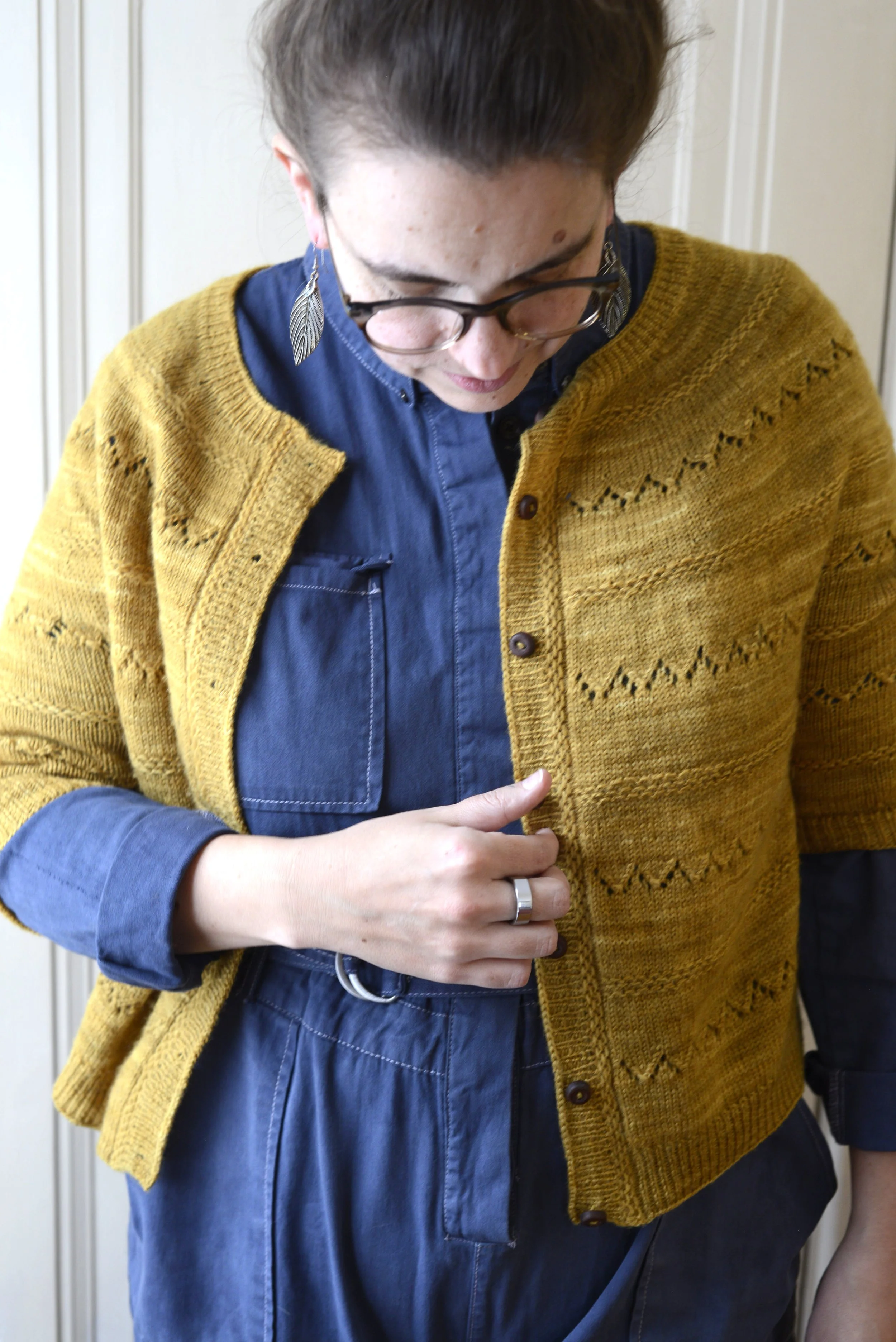 Image 1 of 14
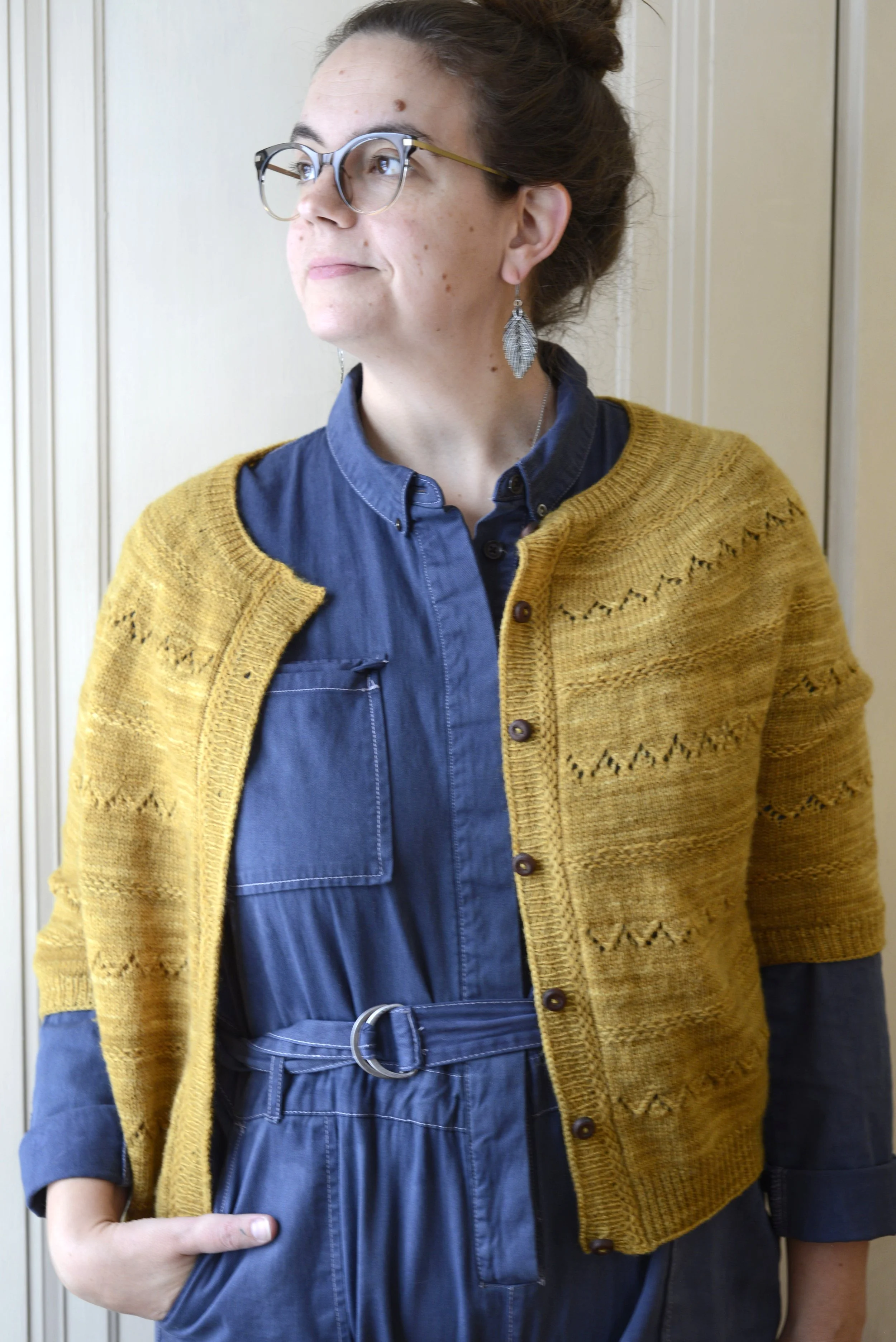 Image 2 of 14
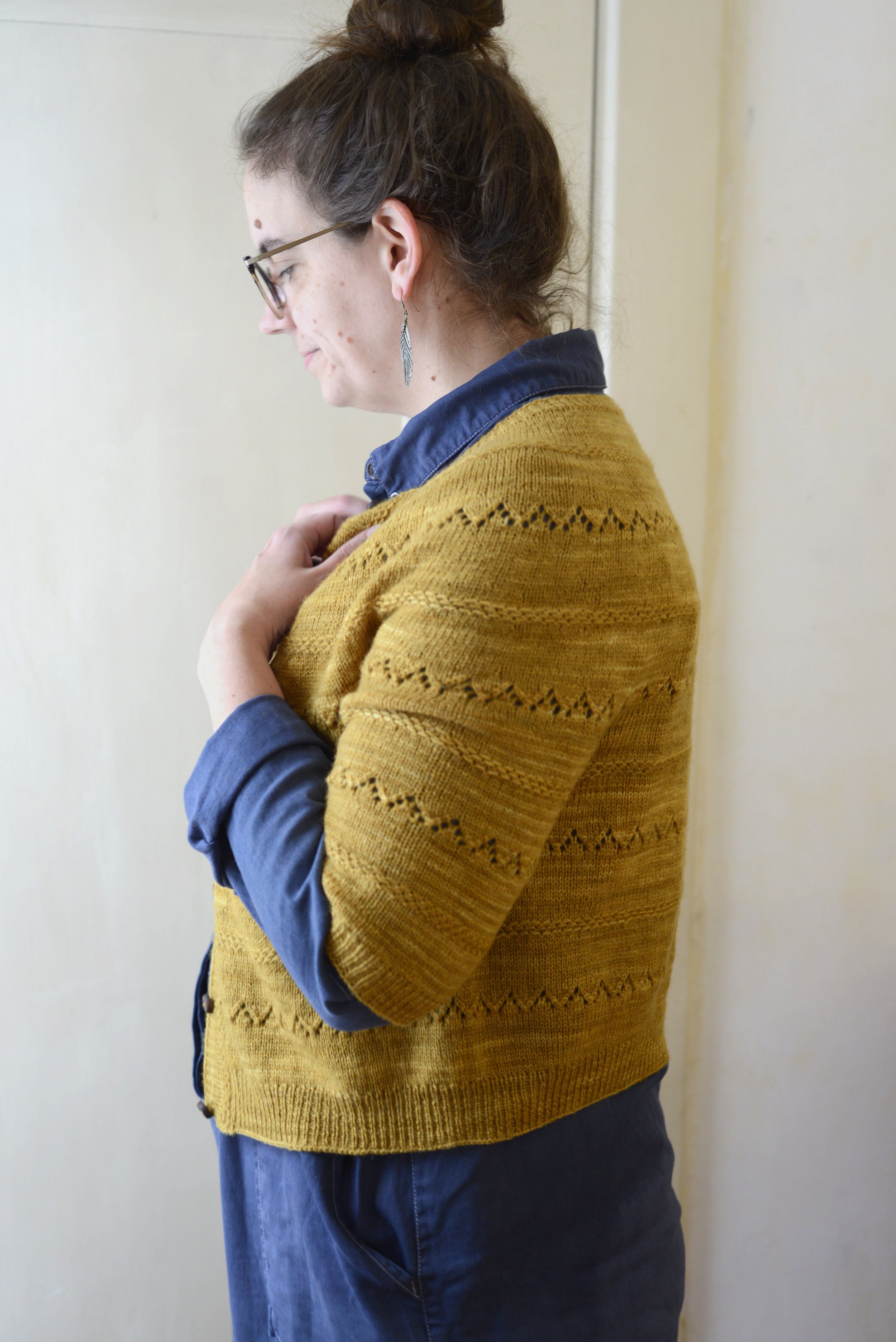 Image 3 of 14
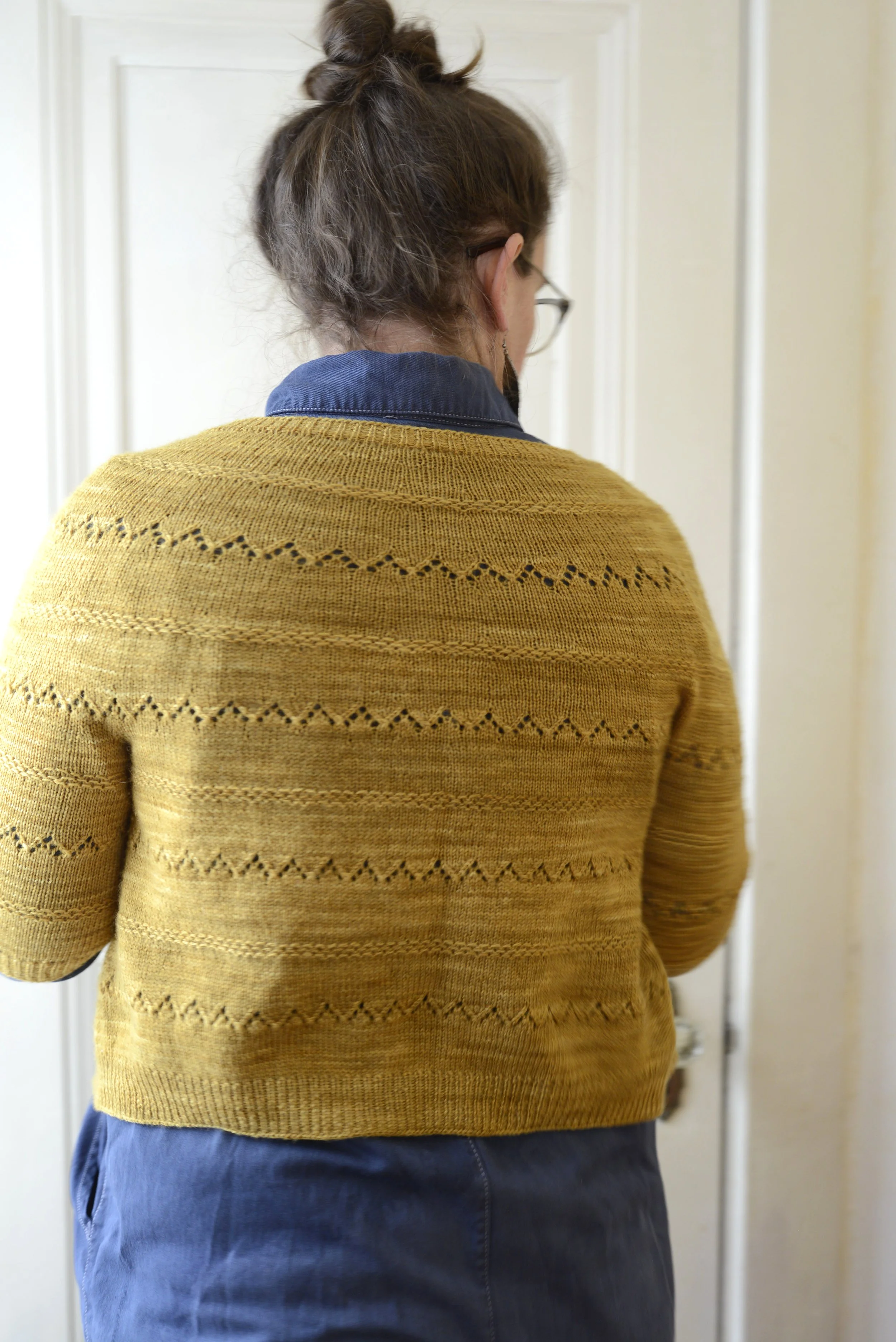 Image 4 of 14
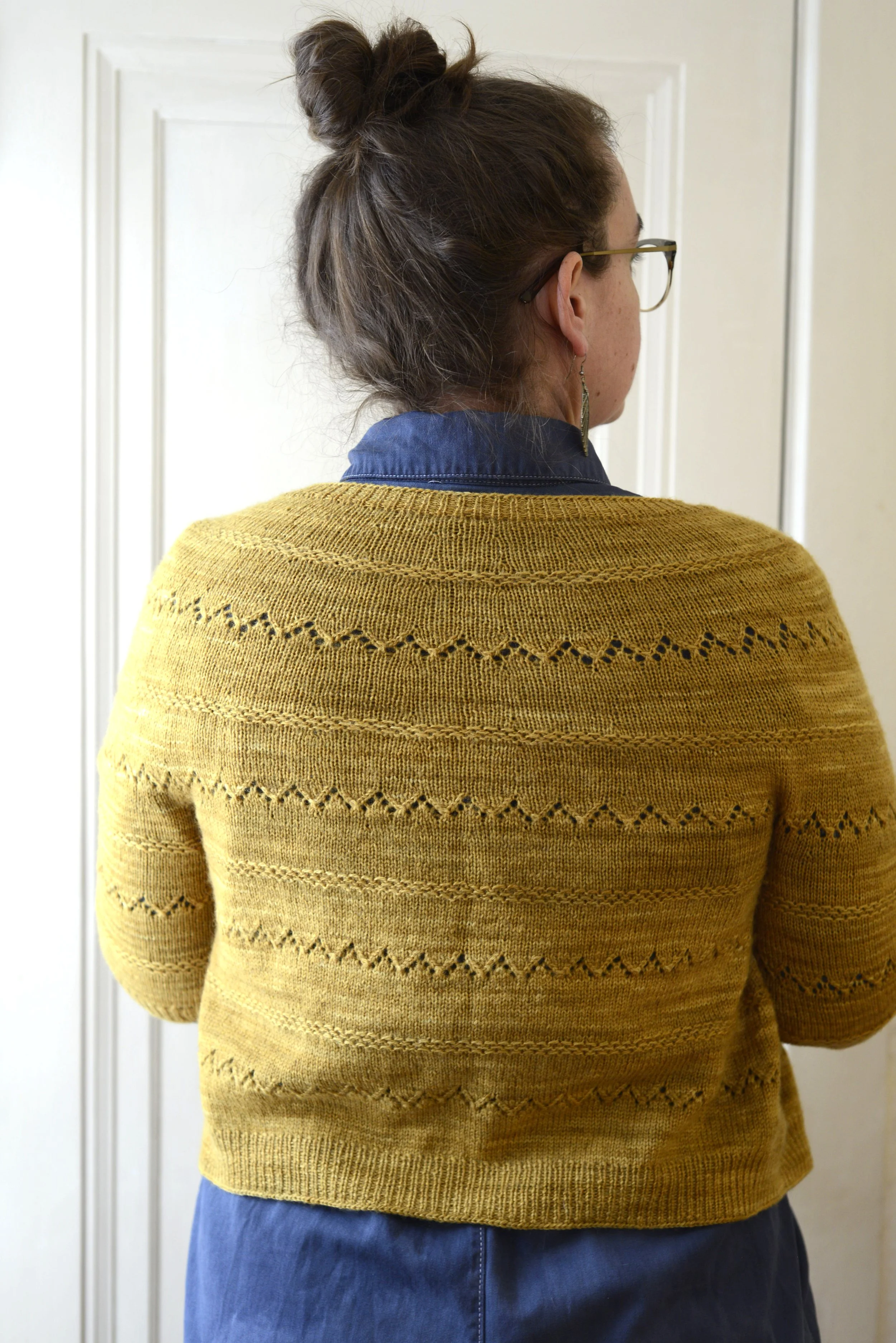 Image 5 of 14
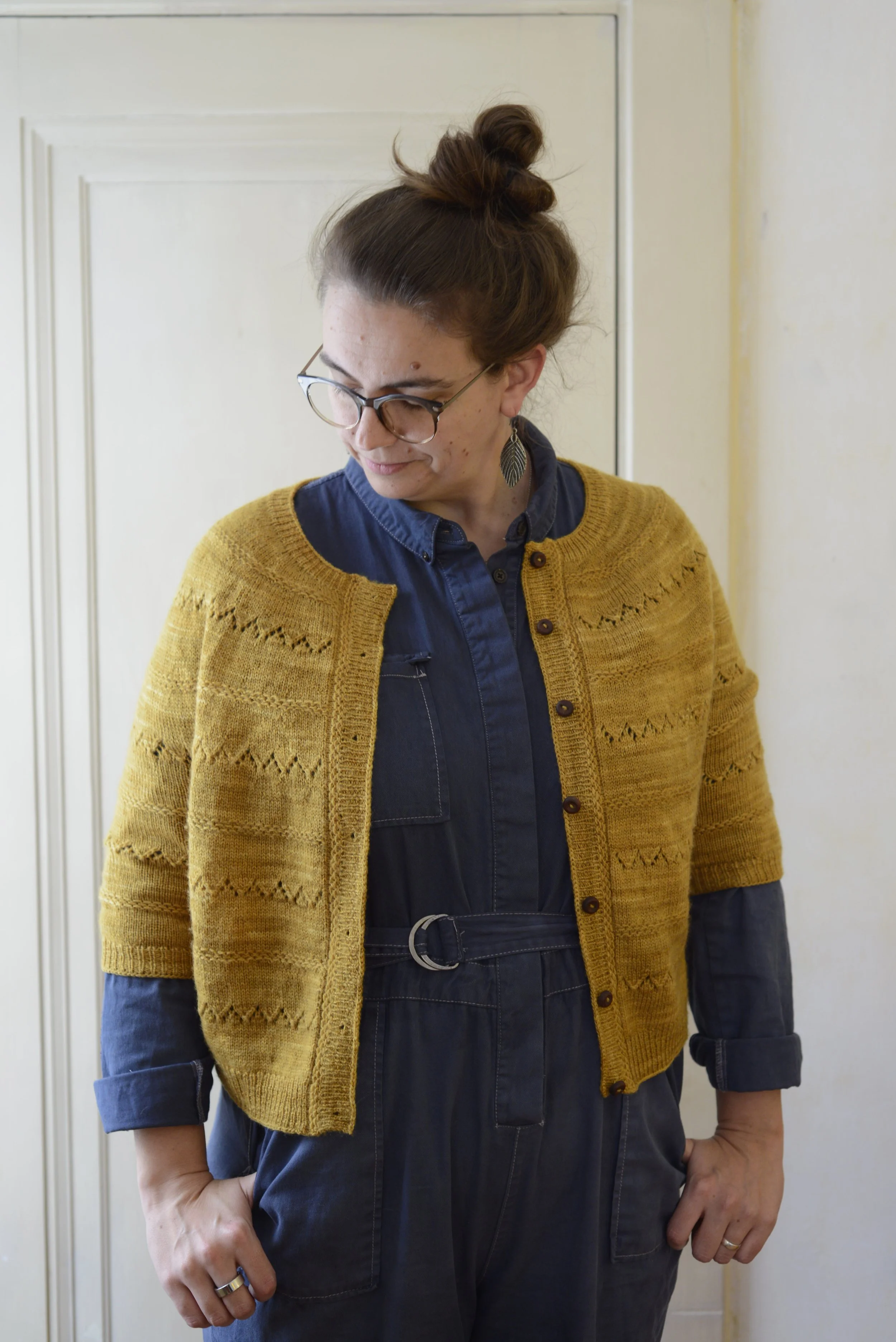 Image 6 of 14
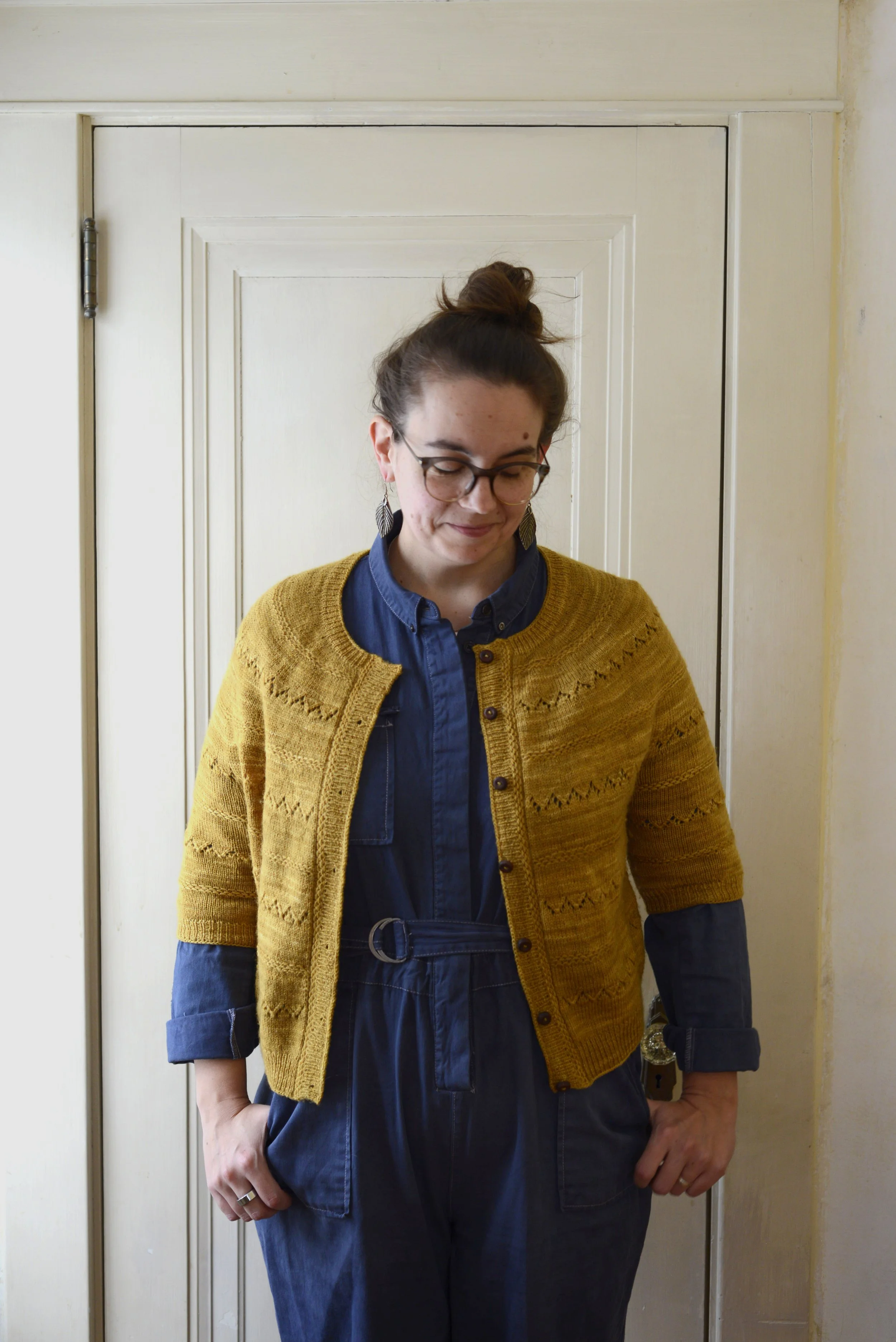 Image 7 of 14
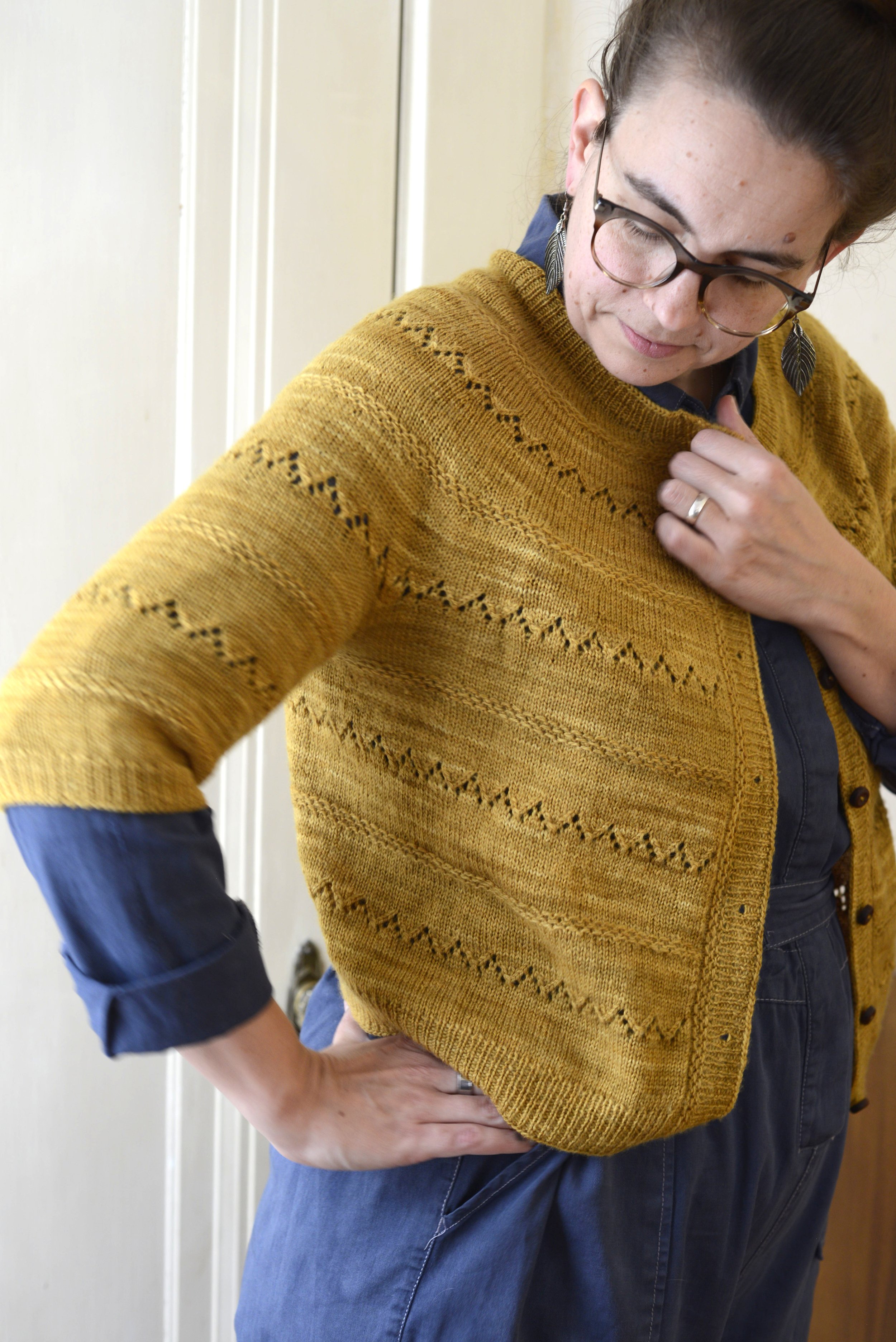 Image 8 of 14
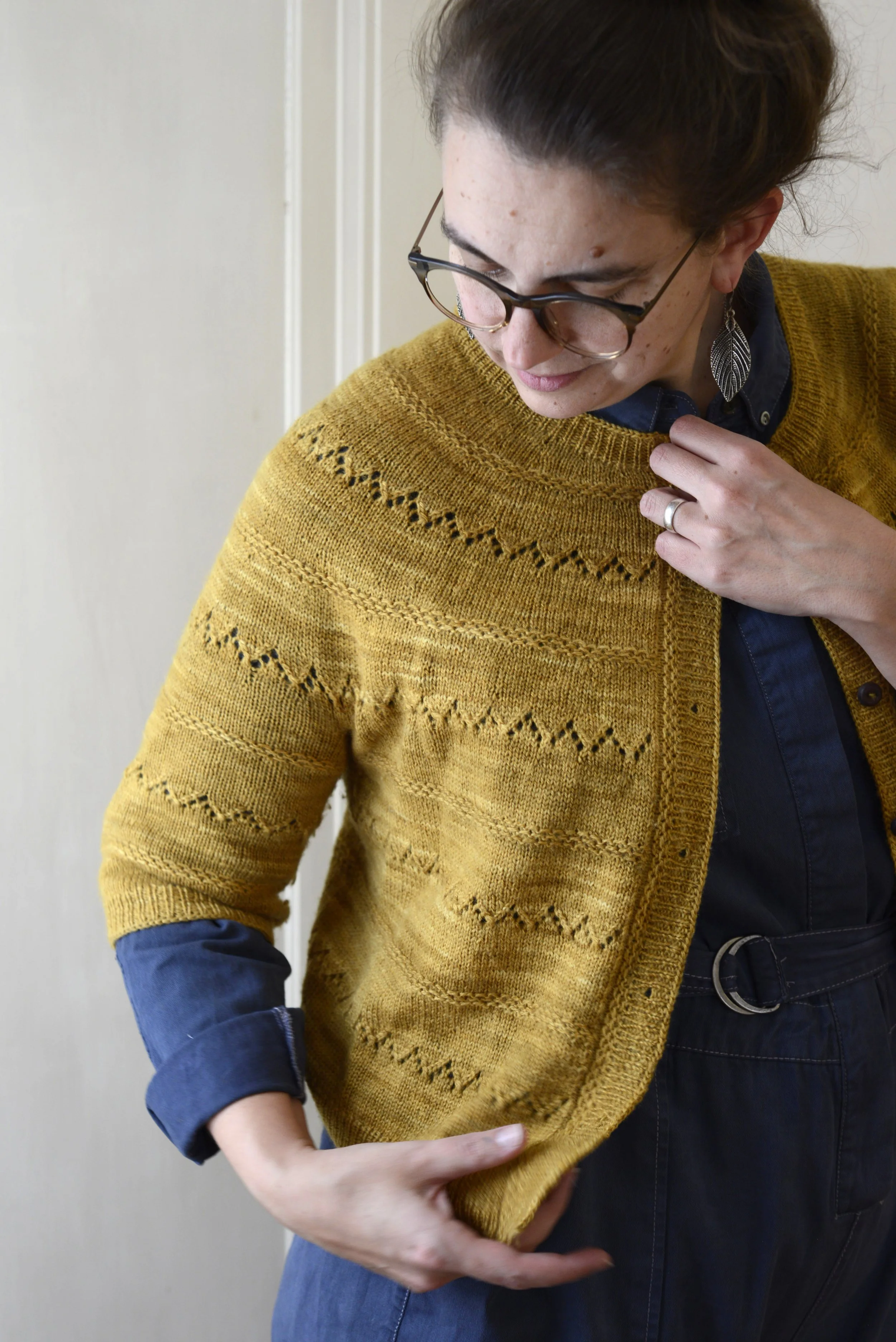 Image 9 of 14
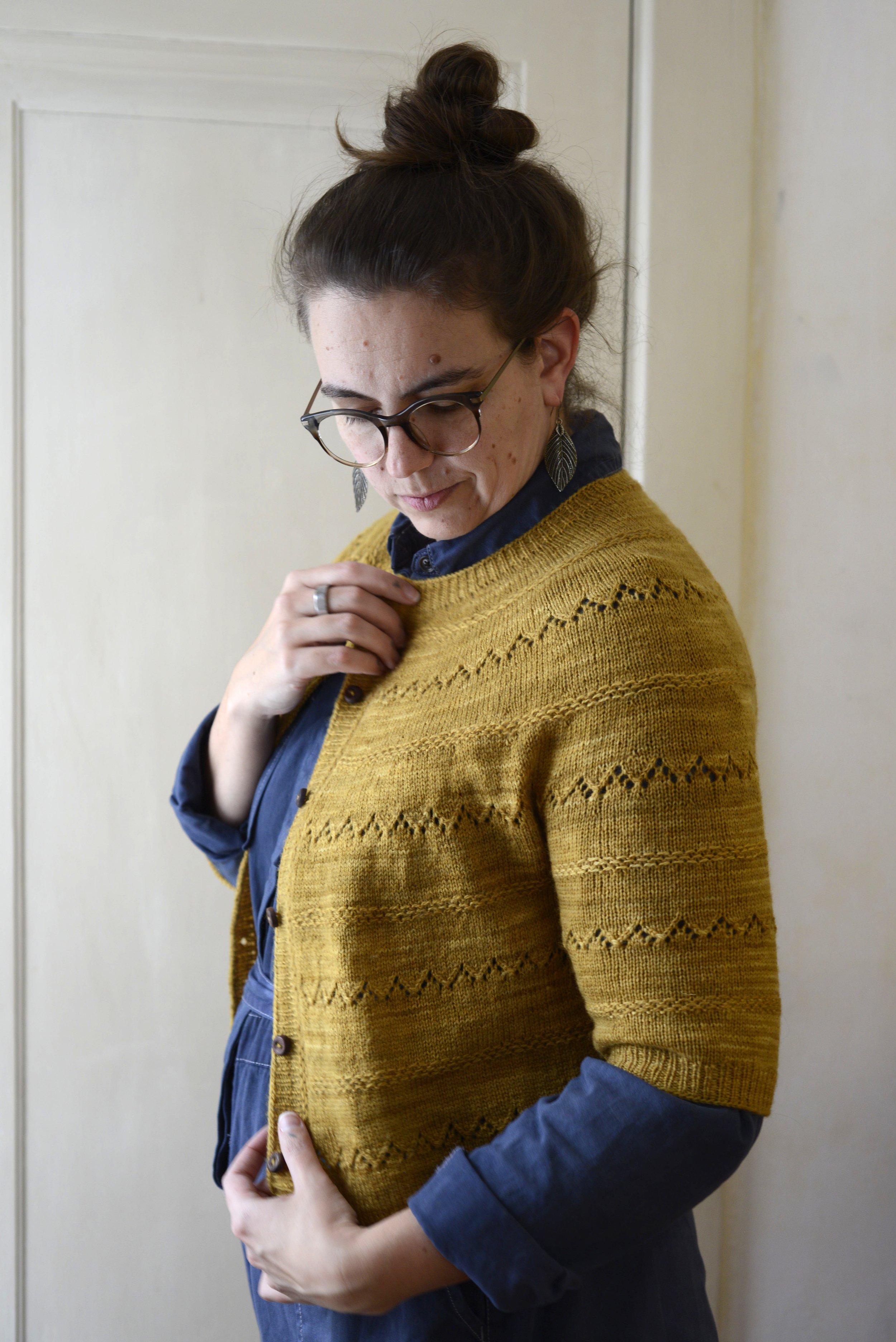 Image 10 of 14
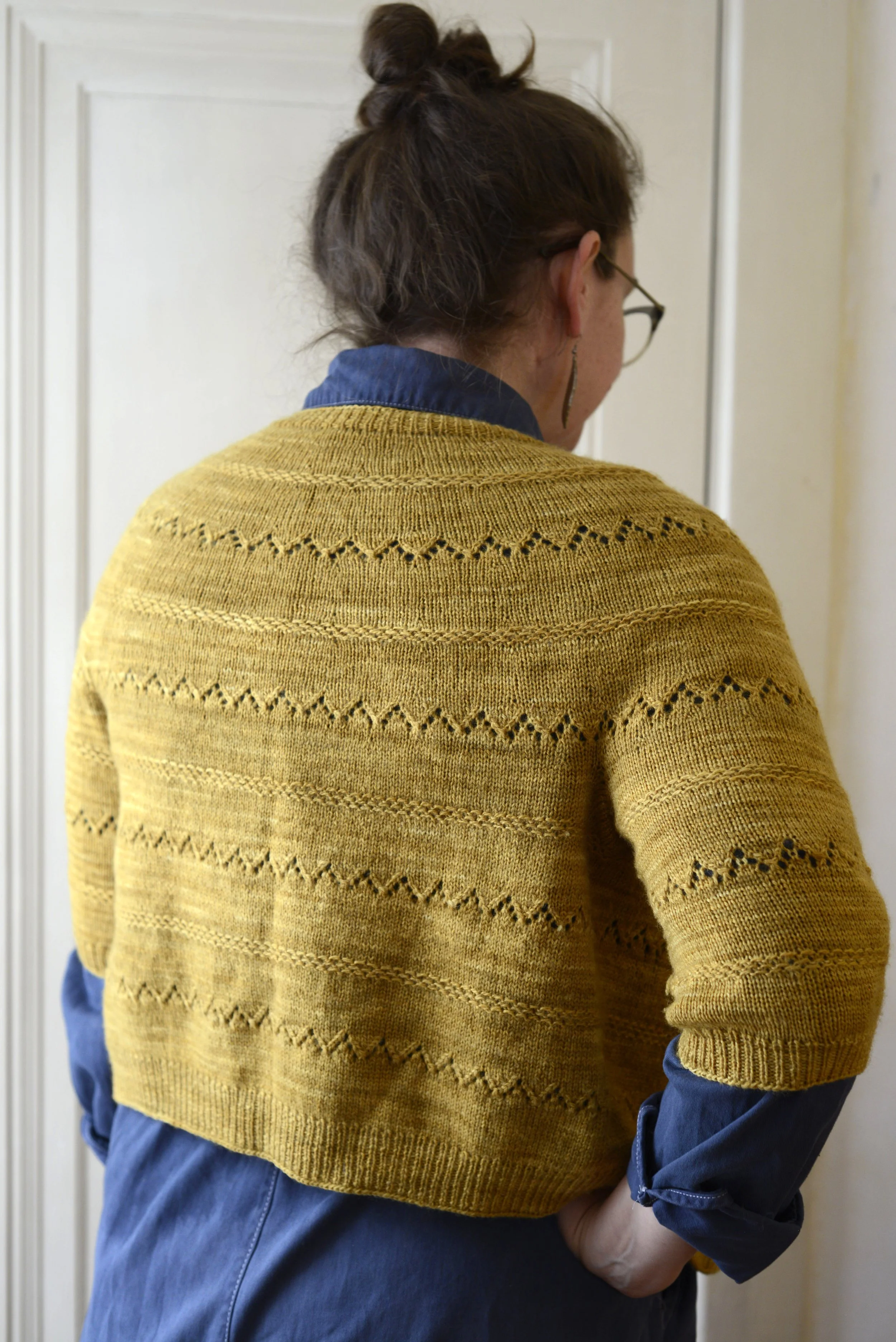 Image 11 of 14
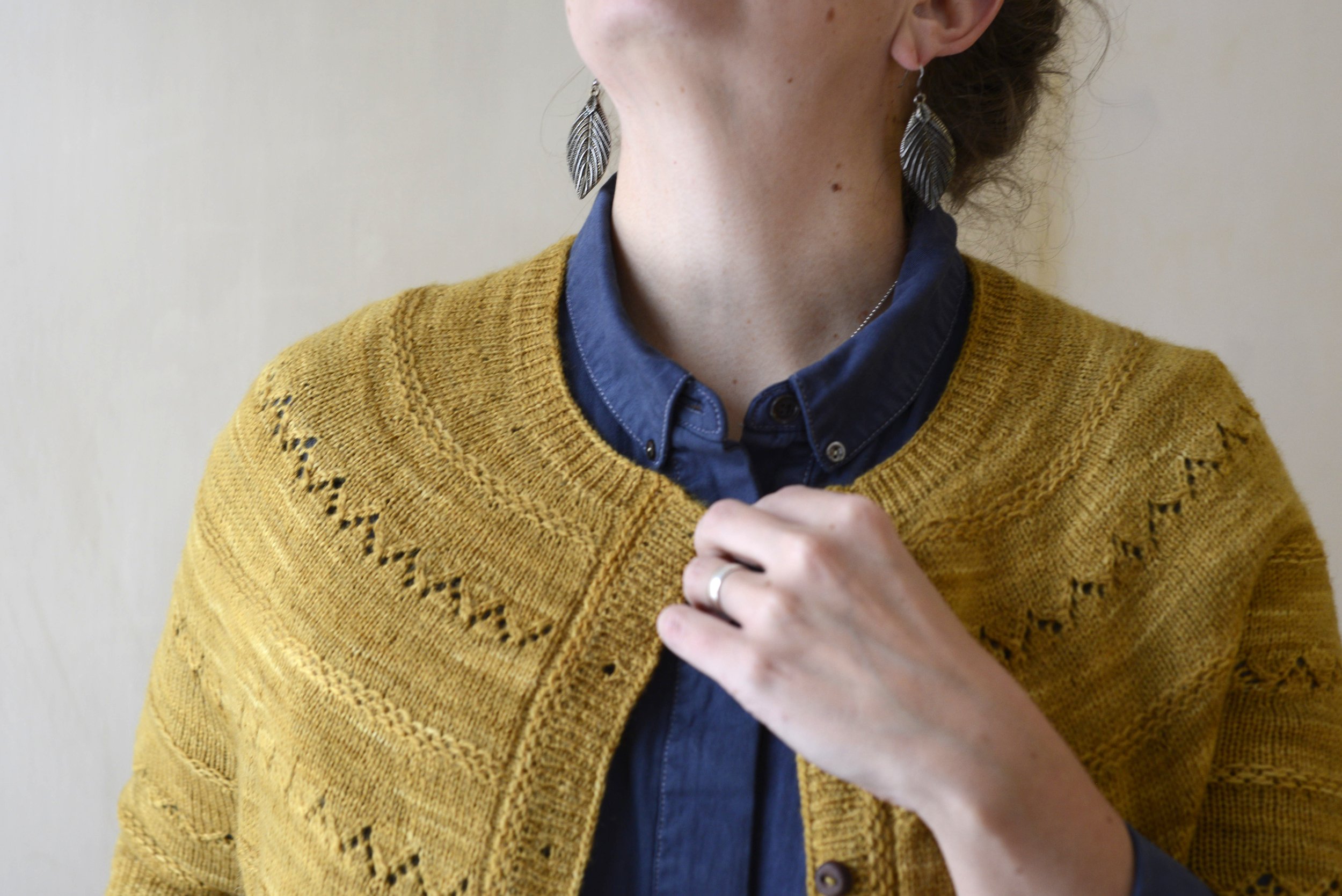 Image 12 of 14
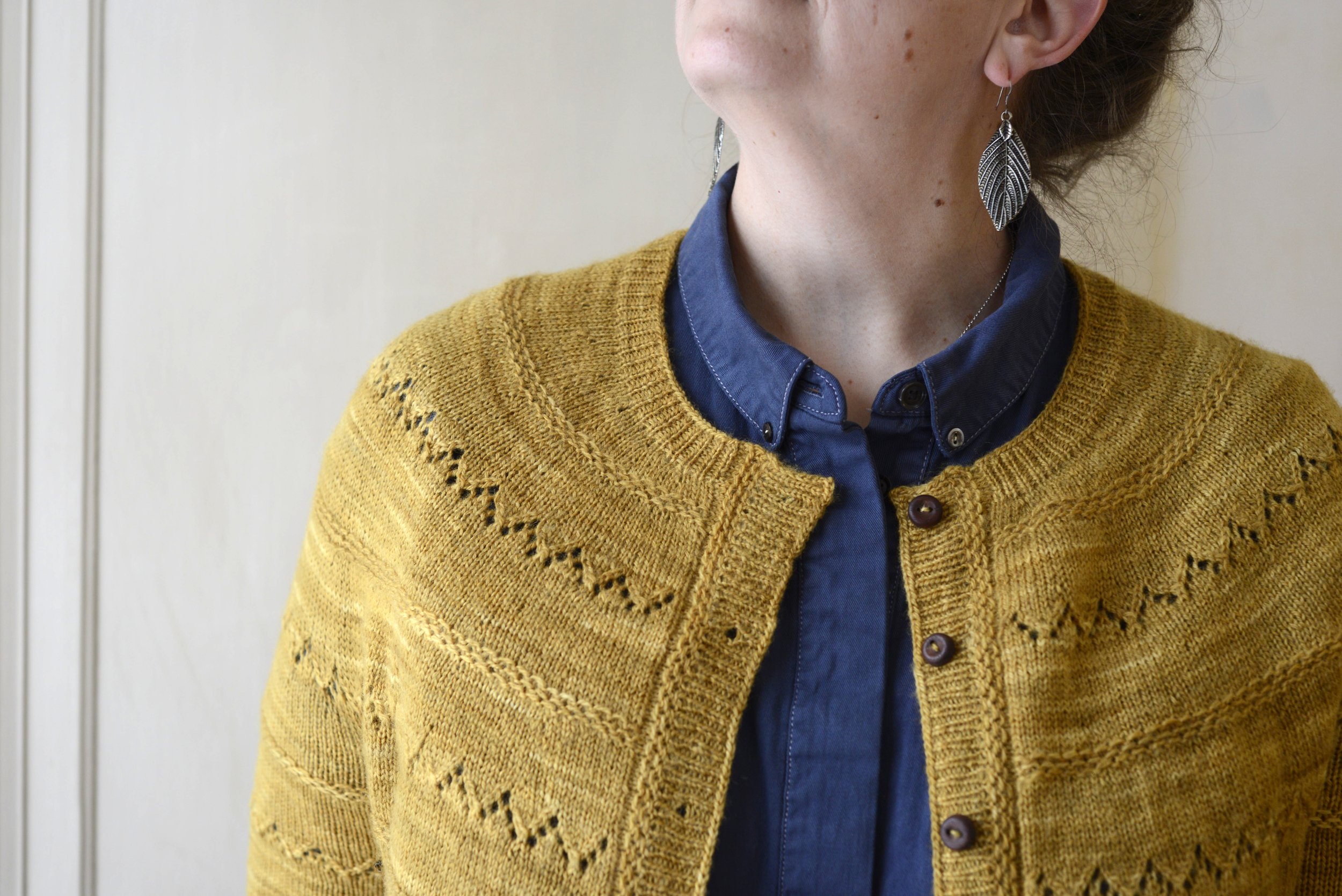 Image 13 of 14
 Image 14 of 14